
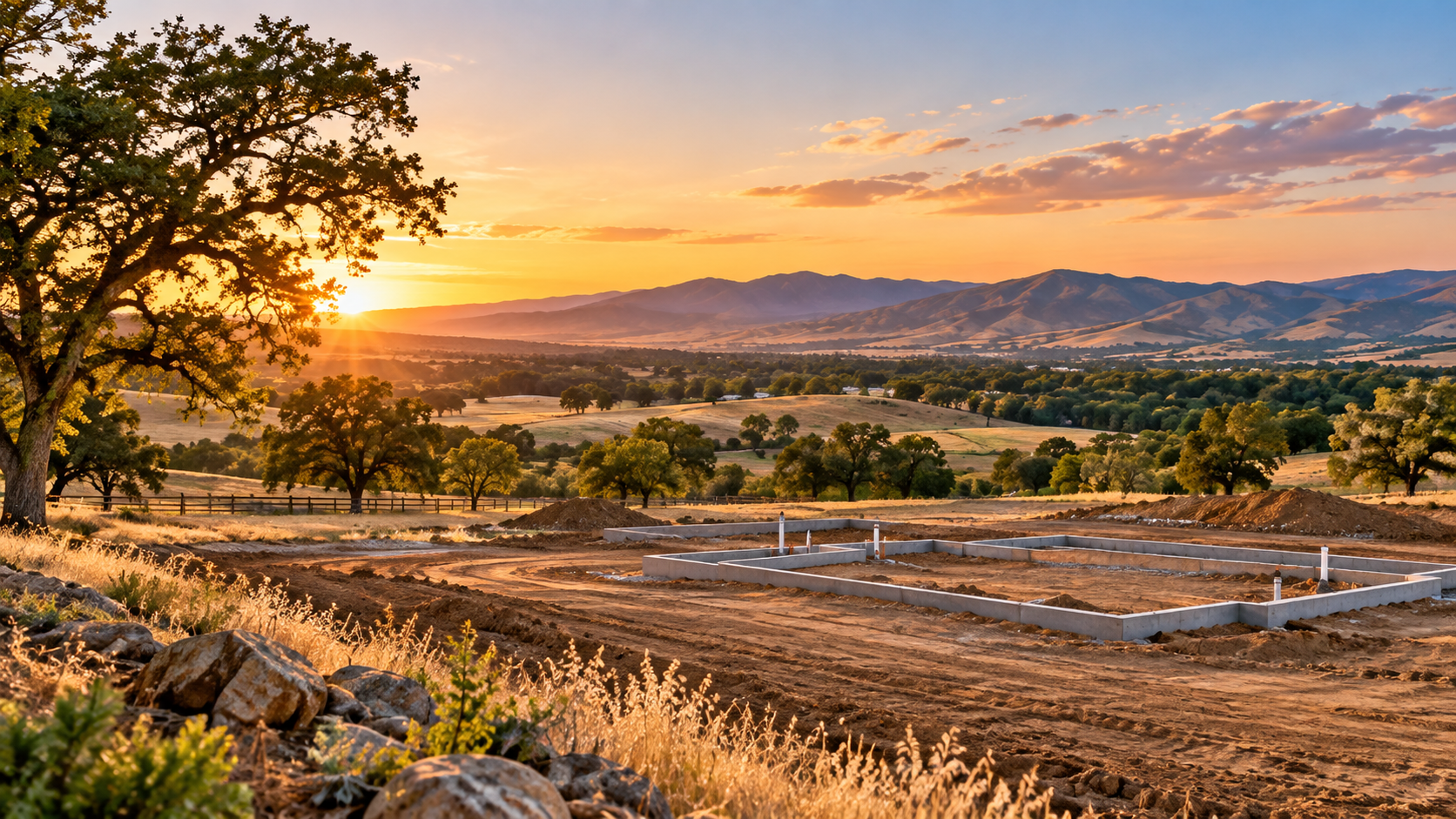
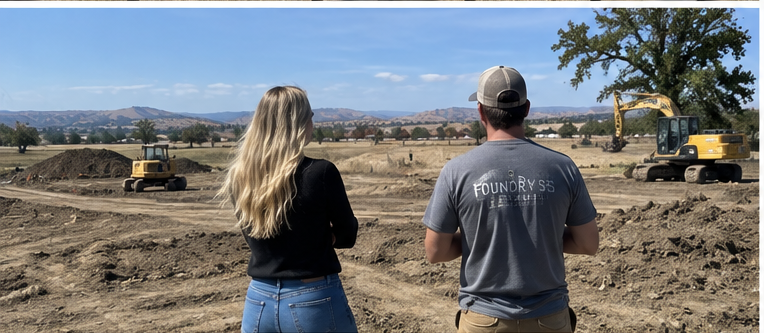
BUILD ON YOUR LAND
HAVE A VISION? START WITH THE LAND.
Building your own home can be an incredible opportunity.
Maybe you've pictured a farmhouse at the end of a long driveway. A few acres for horses. A garden and an orchard. A shop. Room for your kids to run. Or simply a home designed exactly around the way your family wants to live.
But before you fall in love with the view, there's an important question to ask:
Can you actually build what you want here?
That's where I come in.
My job isn't to tell you that every parcel can become your dream property. It's to help you find the right land, identify the questions that need answers, and connect you with the appropriate professionals so you can make an informed decision before you buy.
BEFORE YOU BUY THE DIRT
-
What is the property zoned for?
Can you build a single-family home? More than one structure? A barn, shop, or ADU? Are there agricultural or other land-use restrictions?
DON'T ASSUME. VERIFY.
The zoning and land-use rules for a property should be confirmed with the appropriate local jurisdiction before you purchase.
-
How will you get to your future home?
Is there legal and practical access to the property? Is there an existing driveway? Will you need an easement? What will it take to create or improve the access?
A beautiful parcel isn't very useful if you can't get where you need to go.
-
Where will your water come from?
Depending on the property, that could mean a municipal connection, well or another permitted water source.
Before purchasing, understand the available water options, the associated costs and what approvals may be required.
-
If the property isn't connected to a sewer system, you'll need to understand how wastewater will be handled.
A septic evaluation and appropriate site investigation can be an important part of determining whether a property can support your plans. Is there a leech field if it is on a septic system? When was it pumped last? What is the tank made of? All questions you will want to have answered.
-
Don't forget what's underneath—or not underneath—the property.
You'll want to understand the availability and cost of electricity, gas, internet, water, sewer or septic, and other utilities needed for your future home.
THE COST OF THE LAND IS ONLY PART OF THE PROJECT.
-
Before you start designing your dream home, understand the land itself.
Flood considerations, soil conditions, drainage, topography and other site characteristics can affect what you can build and what it may cost.
This is where the right professional due diligence becomes especially important.
-
Know what you're buying.
Surveys, easements, access rights, utility corridors and property boundaries can all affect how a parcel can be used.
Don't assume the fence line tells the whole story. Is there a PG&E easement? A neighborhood road agreement? HOA?
THE DOS & DON'TS OF BUYING LAND TO BUILD ON
DO
DO define your vision first.
Know what you're hoping to build and how you want to use the property.
DO investigate before you buy.
Ask questions about zoning, utilities, access, water, wastewater and site conditions before making a commitment.
DO talk to the right professionals.
Depending on the property, that could include planners, surveyors, engineers, septic professionals, architects, builders, lenders and other specialists.
DO understand the total project cost.
The purchase price is only one piece of the puzzle. Site work, utilities, permits, design, construction and infrastructure can all add significant costs.
DO build your team early.
The right people can help turn a beautiful idea into a realistic plan.
DO leave room for the unexpected.
Building on raw or rural land can involve more variables than buying an existing home. A thoughtful contingency can help protect your plans.
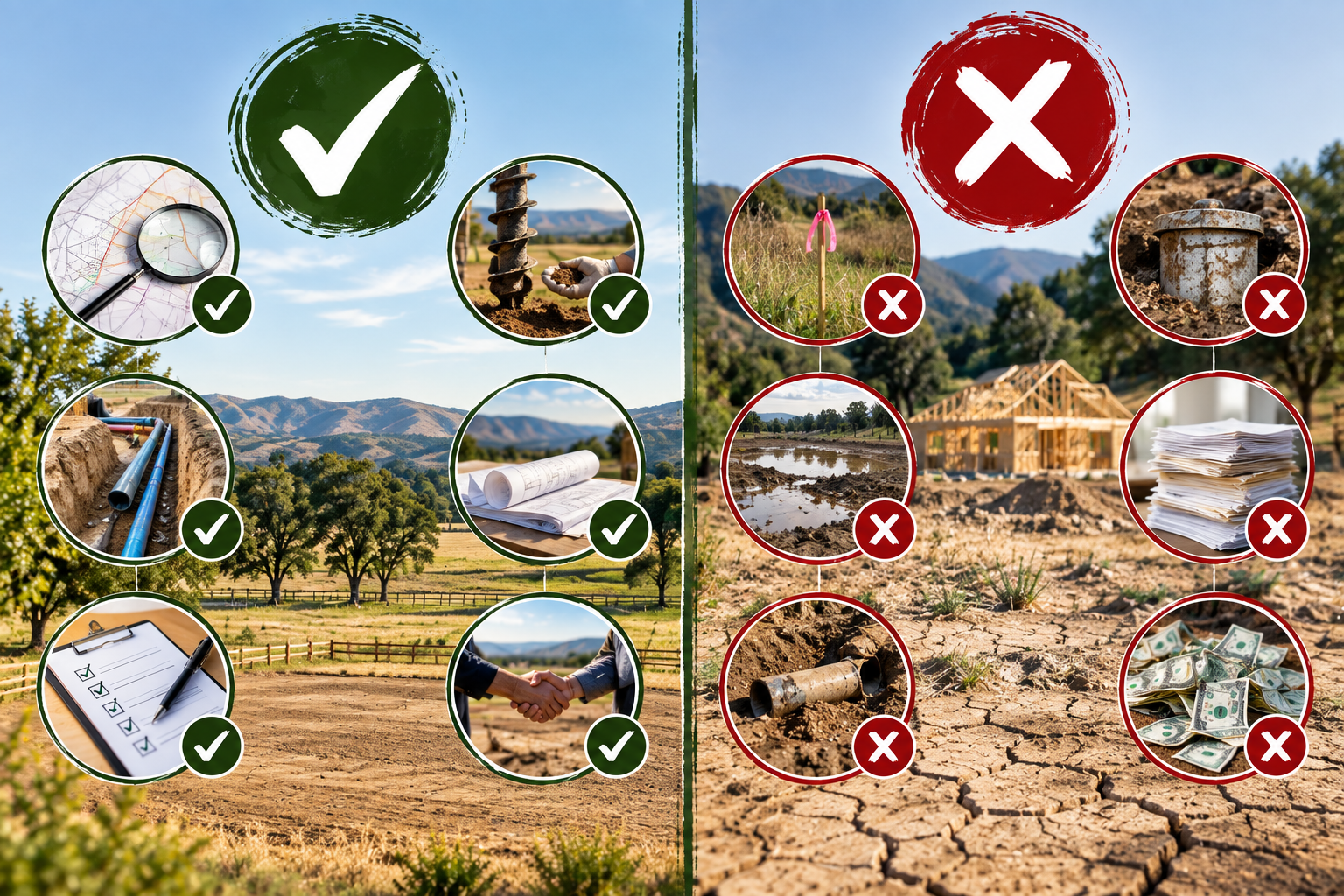
DON'T
DON'T assume land is buildable.
A parcel being for sale doesn't automatically mean you can build the home you have in mind.
DON'T assume the property can be subdivided.
Future development possibilities depend on zoning, parcel characteristics and applicable regulations.
DON'T assume utilities are easy or inexpensive.
A nearby utility doesn't necessarily mean connecting to it will be simple or affordable.
DON'T skip due diligence because you love the property.
The most beautiful piece of land can still have challenges that matter to your plans.
DON'T rely on verbal assurances.
Get important information confirmed by the appropriate jurisdiction or qualified professional.
DON'T buy the land before understanding the vision.
Work backward from what you want to build and determine whether the property can realistically support it.
START WITH THE VISION. THEN FIND THE LAND.
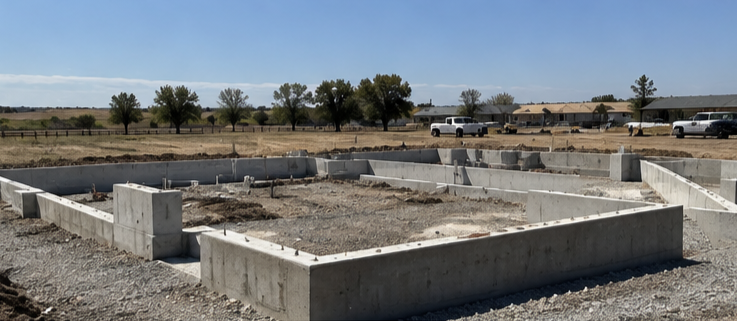
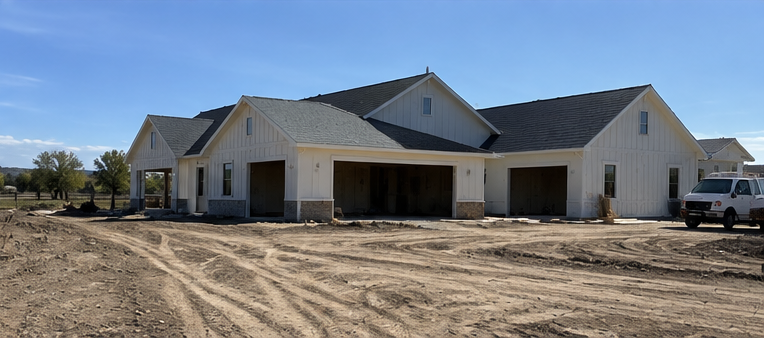
One of my favorite things about land is that you're not just buying what already exists.
You're buying possibility.
But possibility needs a plan.
If
If you tell me:
“I want a farmhouse, a few acres, room for horses, a garden and enough space for my kids to grow up,” we can start looking for land that fits that vision.
If you're thinking:
“I want to build a custom home, but I don't know where to start,” we can start there, too.
I'll help you identify properties that may fit what you're trying to accomplish and help you understand the questions that need to be answered before you move forward. When specialized questions come up, I'll help connect you with the professionals who can provide the answers you need.
YOUR LAND TEAM STARTS WITH THE RIGHT QUESTIONS.
You don't need to know everything about building before you start looking.
You do need someone who will help you ask:
Can I build here? What can I build here? What will it take to build here? What could change the cost or timeline? Who needs to verify it?
That's where I can help.
I bring the real estate perspective and local knowledge, help you navigate the process, and connect the dots between the land you're considering and the vision you have for it. I'm not the engineer, architect, septic designer or permitting authority—and I won't pretend to be. I'm the person in your corner helping you figure out who you need, what you need to ask, and when you need to ask it.
If you’re considering buying land to build on, I'd love to hear what you're envisioning. Tell me about the property you're looking for, the home you want to build, and the lifestyle you're hoping to create.